Flame Fusing Hardfacing vs. Ordinary Weld Repair for Crusher Counterweights
Crusher counterweights are critical cast steel components that maintain rotor dynamic balance and stable operational precision across heavy-duty crushing systems. Subjected to continuous high-speed centrifugal force, severe particle abrasion, and repeated impact loads during mineral processing, counterweight outer surfaces are prone to premature wear, peeling, and structural failure.
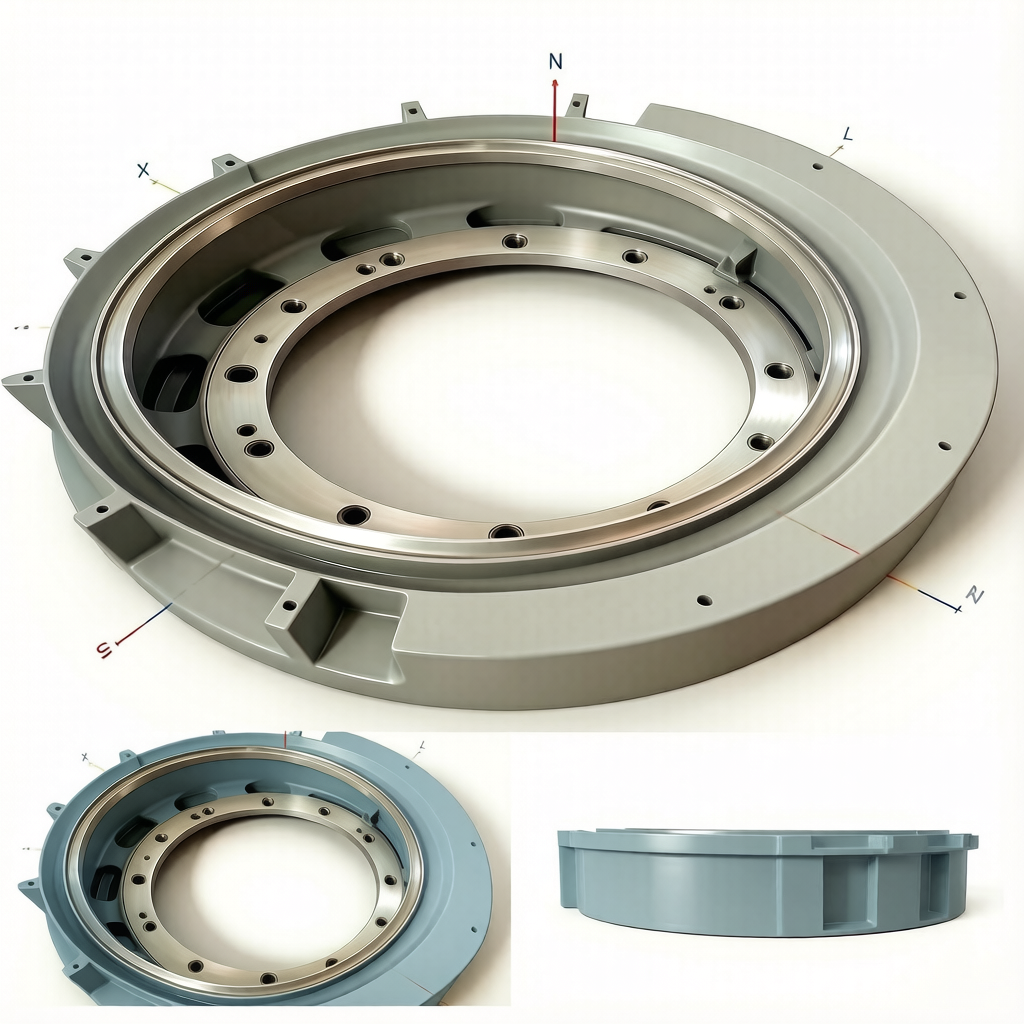
A common source of inconsistent component service life is the confusion between conventional weld repair and standardized oxy-acetylene flame fusing hardfacing. Low-grade counterweights rely on basic repair welding, which typically fails within 1 to 3 months due to coating delamination, surface irregularity, and excessive machine vibration. Premium-grade crusher counterweights adopt professional cobalt-based or nickel-based self-fluxing alloy fusing, a dedicated surface enhancement process designed for heavy mining operating conditions. This article breaks down the full process, technical principles, operational standards, and process comparisons to help procurement and engineering teams identify high-performance component manufacturing standards.
1. Complete Oxy-Acetylene Flame Fusing Process
Field operations are often misinterpreted as simple fluid welding or surface patching. In practice, flame fusing is a standardized, process-controlled surface strengthening technology exclusively applied to heavy cast steel mining components, implemented in two rigorous stages:
1.1 Uniform Preheating (Stress Elimination Foundation)
Crusher counterweights are thick-section cast steel parts with low thermal conductivity and high residual casting stress. Before hardfacing, the component’s outer working area is uniformly preheated via oxy-acetylene flame, with a strictly controlled temperature range of 200℃ to 350℃.
This preheating stage heats the base material without melting it, serving three core technical purposes: eliminating internal casting stress to prevent post-weld cracking; reducing the temperature difference between the base metal and molten alloy to avoid thermal peeling; and removing surface oil, moisture, and oxide layers to eliminate porosity and inclusion defects.
1.2 Inclined Melting & Flame Guided Alloy Cladding
To precisely control molten alloy flow and layer uniformity, workpieces are positioned at a controlled inclined angle, utilizing gravity to stabilize cladding distribution. The oxy-acetylene flame, with a core temperature of 3000℃ to 3200℃, melts professional cobalt-based or nickel-based self-fluxing alloy blocks.
The process does not rely on passive fluid coverage. Skilled operators use low-pressure flame airflow to guide and adjust the molten alloy’s flow direction, speed, and layer thickness. Continuous supplementary preheating is applied to the upcoming bonding zone, enabling micro-melting of the base material surface. This achieves metallurgical molecular bonding between the wear-resistant alloy and cast steel substrate, rather than weak physical adhesion seen in ordinary spraying processes.
The final hardfacing layer features a uniform thickness of 2–6 mm and a hardness rating of HRC 55–65, delivering 3–5 times higher impact and abrasion resistance than standard cast steel substrates.
2. Core Technical Distinction: Flame Fusing vs. Ordinary Weld Repair
The mixing of these two processes is the primary cause of inconsistent counterweight quality and service life. The two methods differ fundamentally in application purpose, metallurgical mechanism, and structural performance:
2.1 Ordinary Weld Repair (Refurbishment Process)
Ordinary welding is a remedial maintenance technology applied to damaged, cracked, or worn used components. It uses common welding rods to fill surface defects and restore workpiece dimensions only, with no wear-resistant enhancement. Repair welding layers feature high residual stress and weak bonding strength, prone to secondary cracking and rapid wear under mining impact loads. This method is limited to temporary on-site maintenance and is never adopted as a factory finishing process for new components.
2.2 Flame Fusing Hardfacing (New Component Enhancement Process)
Flame fusing is a value-added manufacturing process for brand-new intact cast steel blanks. The self-fluxing alloy layer forms a dense, pore-free metallurgical bond with the base metal, delivering stable anti-wear and anti-impact performance. As a standard finishing process for heavy crusher counterweights, it fundamentally solves common failure risks including layer peeling, surface abrasion, and structural unbalance.
3. Industrial Advantages of Manual Flame Fusing
Although manual flame fusing relies on operational experience and lacks full automated precision, it remains widely adopted in heavy mining component manufacturing due to irreplaceable practical advantages:
Superior adaptability for irregular thick-section castings: Large annular counterweight structures are incompatible with the complex tooling requirements of laser cladding and automatic plasma welding. Flame fusing requires no customized fixtures, supporting flexible processing for multi-specification and small-batch customized orders.
Balanced cost and performance: Compared with high-precision automated processes, flame fusing involves lower equipment investment and higher processing efficiency, delivering reliable performance with outstanding cost-effectiveness for international aftermarket component supply.
Controllable industrial tolerance: Experienced technicians stabilize layer thickness and uniformity through fixed inclination angles, constant flame parameters, and uniform flame guidance. Process errors are strictly controlled within industry allowable ranges, fully meeting heavy-load mining operational standards.
4. High-Precision Alternative Hardfacing Processes (Selection Guide)
For projects requiring higher consistency or batch production, three mainstream upgraded processes are available for customized implementation:
Automatic flame fusing (cost-effective upgrade): Equipped with rotating tooling and automatic welding rails, achieving uniform workpiece rotation and quantitative alloy feeding. Thickness tolerance is reduced to ±0.2–0.4 mm, greatly improving batch consistency.
Plasma powder welding (mass production standard): With an arc temperature of 8000–15000℃, concentrated heat source, and minimal substrate deformation. CNC quantitative powder feeding ensures dense and uniform hardfacing layers, ideal for large-scale standardized component production.
Laser cladding (high-end precision process): Provides the highest precision and finest grain structure with ultra-high bonding strength. However, high equipment and processing costs limit its application to precision parts, making it uneconomical for large heavy-duty counterweight components.
5. Frequently Asked Technical Questions
Q1: Will the flame-fused wear-resistant layer peel or delaminate?
No. Our oxy-acetylene flame fusing forms integral metallurgical bonding instead of physical surface attachment. The micro-melted base material and molten alloy fuse into a single structure with a bonding strength of up to 400 MPa, eliminating delamination risks under high-impact mining conditions.
Q2: Why is preheating mandatory before hardfacing?
Thick cast steel components are highly sensitive to temperature differences. Standardized preheating at 200–350℃ eliminates casting residual stress and prevents thermal cracking or layer peeling caused by rapid cooling, which is essential for long-term operational stability.
Q3: What are the advantages of cobalt/nickel alloy materials?
Adopted industrial-grade self-fluxing alloys feature inherent deoxidation and slagging characteristics with excellent fluidity and compact molding. With a hardness of HRC 55–65, the materials provide exceptional resistance to impact and particle abrasion, extending component service life significantly.
Q4: Is automated process customization available?
Yes. We adopt standard manual flame fusing for conventional orders to balance cost and delivery efficiency. Plasma automatic welding is available for high-consistency batch orders, and laser cladding can be customized for ultra-precision technical requirements.
6. Conclusion
The service life and operational stability of crusher counterweights depend not on dimensional accuracy alone, but on professional surface strengthening technology. Ordinary refurbished weld repair only solves superficial defects and leads to frequent equipment vibration, unbalance, and downtime. Standardized flame fusing with cobalt-based or nickel-based alloy creates a reliable, high-performance protective layer through scientific preheating, metallurgical fusion, and precise flow control.
In mining component procurement and supply, professional process capability distinguishes premium manufacturers from low-cost suppliers. Mature surface hardfacing technology ensures consistent component performance, stable quality audit documentation, and long-term operational reliability for global mining and aggregate processing projects.